What is it like to live in Lafayette, Louisiana? It is the heart of Acadiana: a
mid-size city where Cajun and Creole culture, live music, and Gulf seafood are part of
everyday life, not special occasions. People here do not ask whether you enjoy festivals,
they ask which one you are going to this weekend.
Lafayette sits at the junction of I-10 and I-49, roughly two hours from New Orleans, and
it anchors the region where the bedroom communities of Youngsville, Carencro, Broussard,
Breaux Bridge, and Maurice all pull their energy. In one city you get a downtown arts
district, the University of Louisiana at Lafayette, and a food scene built on boudin,
po-boys, and fresh Gulf seafood. I am Destinee Allanson with The Allanson Team at eXp
Realty, and this is the guide I share with buyers who are new to town or just new to
this part of Louisiana.
Neighborhoods
Where do Lafayette people actually live?
Lafayette has a neighborhood for almost every way of living, from historic walkable
streets near downtown to master-planned communities on the South Side. These are the
areas I hear about most from buyers:
01
The Saint Streets
Historic · Most walkable
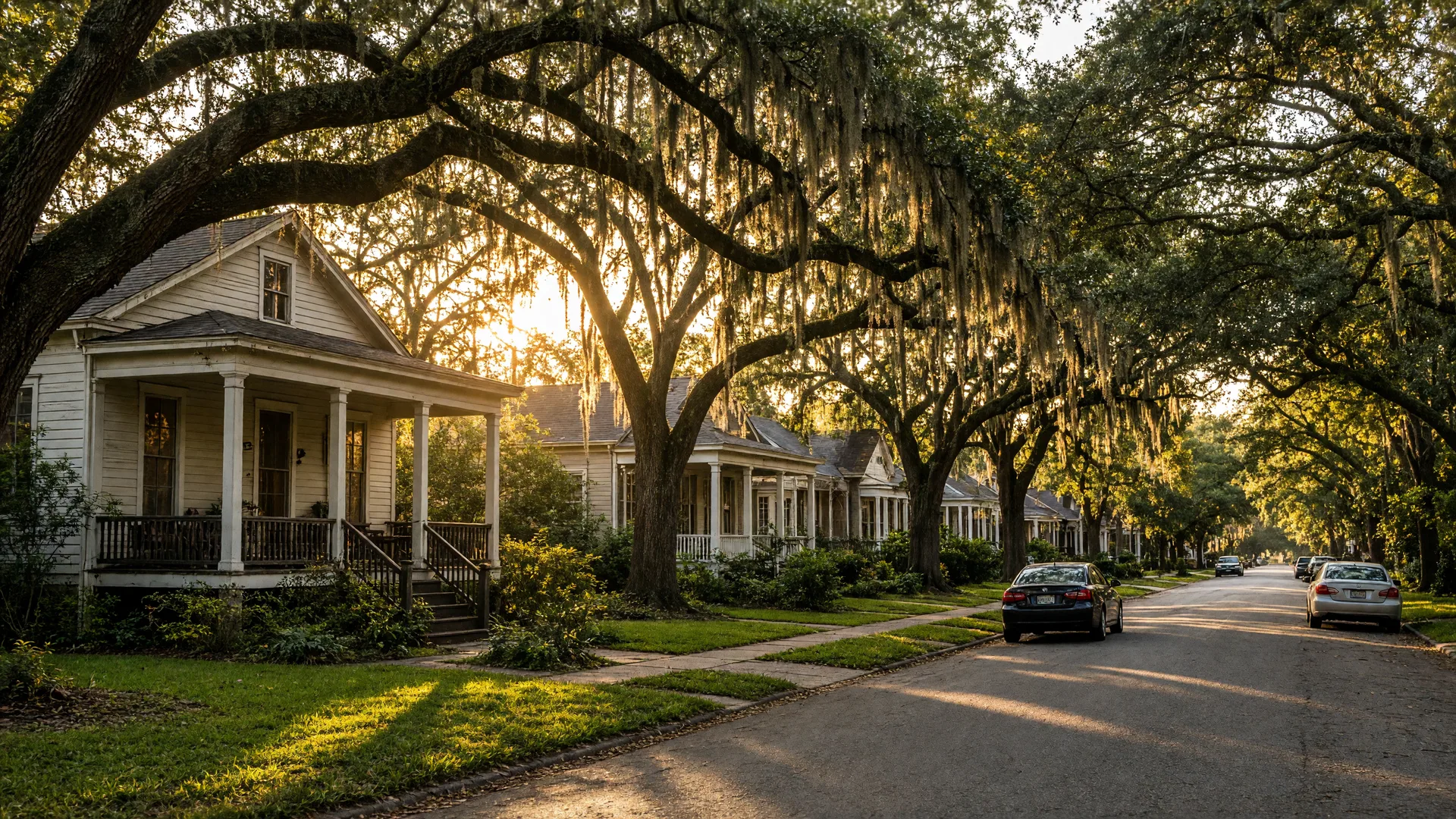
Named for its saint-named streets (Patrick, Joseph, Mary, Louis), this is one of Lafayette's oldest residential areas: turn-of-the-century cottages, century-old live oaks, and a walk to UL Lafayette and downtown. It is the classic choice if you want front porches and shade within strolling distance of coffee.
02
Downtown and its edges
Arts · Dining · Events
Downtown Lafayette is the city's social heart, with galleries, restaurants, and year-round events around Parc Sans Souci. Sitting just around it are historic residential pockets like La Place and McComb–Veazey, so you can live close to the action without giving up a neighborhood feel.
03
The Oil Center
Mid-century · Business & parks
Developed from 1952 as a hub for the region's oil-and-gas industry, the Oil Center mixes offices, restaurants, and shops with Girard Park and the Heymann Performing Arts Center. It was added to the National Register of Historic Places in 2021, so its mid-century character is protected.
04
Freetown–Port Rico
Historic · Lively · Diverse
Just northeast of UL Lafayette, Freetown–Port Rico grew after the Civil War as a settlement for freed people and later drew African, Cajun, Lebanese, and other cultures together. Today it is a diverse, vibrant pocket of homes, local businesses, and music venues close to downtown.
05
River Ranch
Master-planned · Upscale
On Lafayette's South Side, River Ranch is the city's most prominent master-planned community, built around a walkable village of shops and restaurants. It has a polished, resort-like feel and strong resale, which is why it stays near the top of so many wish lists.
06
Broadmoor & Bendel Gardens
Family-friendly · Established
Broadmoor is the family-friendly, mid-century neighborhood real estate guides often recommend when schools are the priority, alongside Greenbriar. Bendel Gardens offers pricier, established homes on leafy streets near Girard Park and the Vermilion River. If you are raising kids, start your search here.
Want the full tour of each neighborhood? My in-depth guide covers
the best neighborhoods in Lafayette,
including how to pick the one that fits your commute, your kids, and your budget.
Developments in progress
What's being built right now.
Cranes and roadwork are part of the Lafayette skyline these days. I keep an eye on
local development news because new projects change commutes, shopping, and values
before the map ever updates. Here is what is actually under way:
Buc-ee's off I-10
The travel-center giant is in full vertical construction at 3400 Louisiana
Avenue, right off I-10, after foundation work earlier in 2025. When it opens,
it will be the biggest new stop on that stretch of interstate.
Hotel Lafayette downtown
Foundation work is under way at 301 East Vermilion Street, on the former
Don's Seafood property at the edge of downtown. A new hotel is rising where
Lafayette has been gathering for generations.
Bertrand Drive redesign
The city unveiled its plan for this major corridor in 2026: a 12-foot shared-use
path, new sidewalks, pedestrian safety upgrades, drainage improvements, and
underground utilities. It is the kind of project that quietly improves a daily
commute for neighborhoods all along it.
Verot Apartments
Announced in late 2026: a $35.5 million, 208-unit apartment community planned
for the former Dax property on Verot School Road, spread across nine buildings
on the site.
D.R. Horton Louisiana West office
One of the country's biggest homebuilders is putting up its new regional office
near Eraste Landry Road and Foreman Drive, with completion expected in early
2027. Builders plant flags where the demand is real.
National Guard Readiness Center
A $37.4 million, roughly 84,000-square-foot Louisiana National Guard Readiness
Center is under construction on West Congress Street, with progress updates
rolling out through 2026.
Smaller projects are everywhere too: new townhomes on Southern Heights Drive, a
storage and flex-space development on Marcon Drive in North Lafayette, and a new AMO
Title Services office in River Ranch. I track these week by week on
Developing Lafayette,
and I am happy to walk you through what is coming next for any neighborhood you are
considering.
Schools
How do the schools work?
Public schools in Lafayette and Lafayette Parish are run by the Lafayette Parish School
System (LPSS): roughly 44 campuses serving around 29,000 students. High schools include
Lafayette High
Acadiana High
Carencro High
Northside High
Southside High
David Thibodaux STEM Magnet Academy
The district also includes charter options such as Acadiana Renaissance Charter Academy
and Willow Charter Academy, and the University of Louisiana at Lafayette adds a
college-town layer of lectures, athletics, and a graduate pipeline for local companies.
The honest part: school zoning changes, and
attendance lines shift over time. I pull the current zoning, feeder pattern, and
open-enrollment details for every home we look at. Never assume a street is zoned the
way a neighbor remembers it.
Commuting
Getting around.
Lafayette is a driving town, and the freeways are genuinely convenient. I-10 runs east
to Baton Rouge and New Orleans and west toward Texas; I-49 runs north and connects to
I-20 at Shreveport. New Orleans is about 130 to 135 miles, roughly two hours
non-stop on I-10, crossing the 18-mile Atchafalaya Basin Bridge along the way.
Many locals prefer US Highway 90, the alternate route through New Iberia, Morgan City,
and Houma, when Baton Rouge bridge traffic is heavy, even though it takes a little
longer. For flights, Lafayette Regional Airport (LFT) handles many common routes, and
frequent travelers often drive to New Orleans (MSY) for long-haul flights and cheaper
fares. Within the region, most people can be at work, school, or the airport in well
under half an hour.
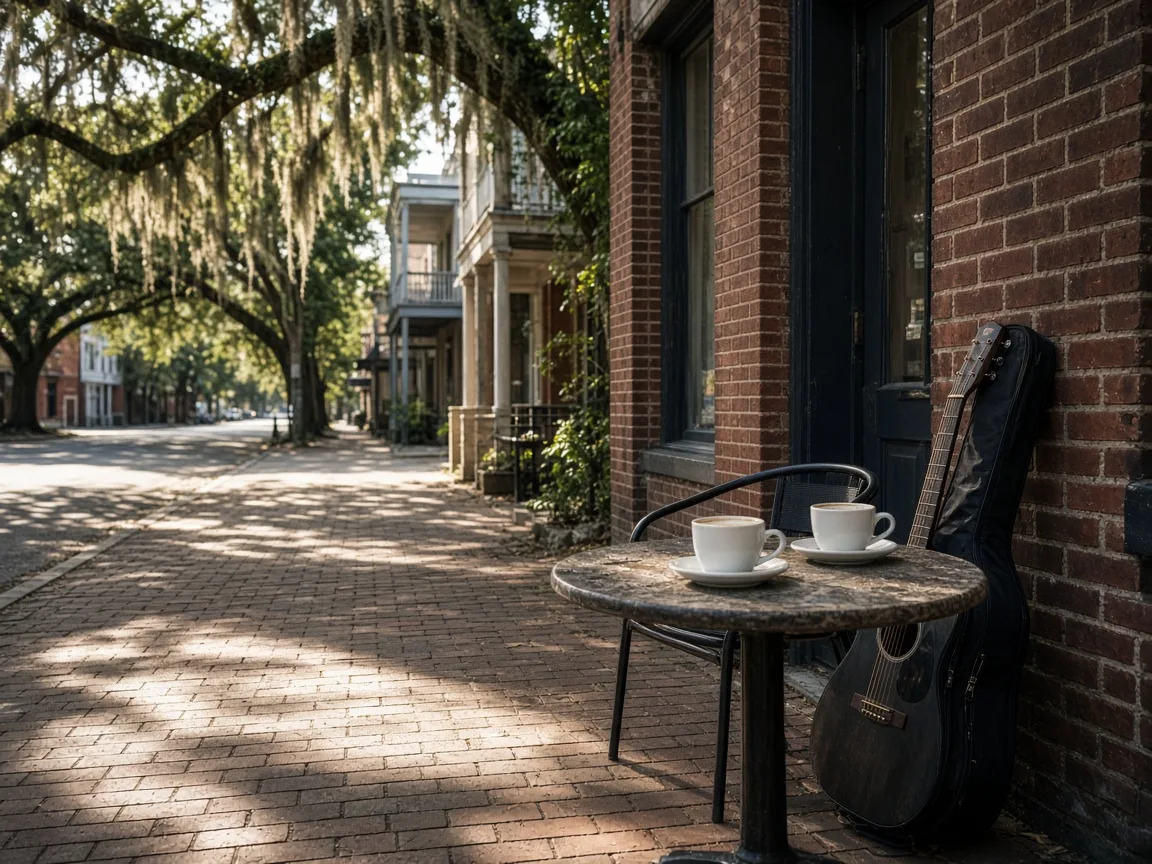
Downtown Lafayette is where the city gathers: music, coffee, festivals, and food.
Dining & local life
Food, music, and festivals.
Downtown is the social heart: the Acadiana Center for the Arts, the Lafayette Science
Museum, Parc Sans Souci, and block after block of live music. Festival International de
Louisiane arrives every April and is billed as the largest non-ticketed outdoor
Francophone festival in the world, with about 500 artists from some 15 countries each
spring; Festivals Acadiens et Créoles lands in October; and Mardi Gras is one of the
biggest celebrations in Louisiana. Vermilionville Living History Museum and Folklife
Park recreates an early Acadian and Creole village, with weekly Cajun and Zydeco
dances.
The museum set punches above the city's size: the Hilliard Art Museum at UL Lafayette,
the Children's Museum of Acadiana, the Lafayette Science Museum downtown, and Acadian
Village on the south side. Downtown Alive! and Bach Lunch put free music on the
calendar most weeks, and the Lafayette Farmers and Artisan Market at the Horse Farm is
the weekend ritual for produce, coffee, and local goods.
For fresh air, Moncus Park spreads across 100 acres of trails, playgrounds, and
gardens just south of downtown with events year-round, and Girard Park's lake and
walking paths anchor the Oil Center. Lake Martin, a short drive from town, is a
favorite for birding and quiet swamp tours when you want a half-day escape. And when
you want the full event calendar, the
Lafayette travel site
keeps every festival, market, and weekend itinerary in one place.
On the food side, Lafayette is famous for institutions like Johnson's Boucanière
(house-smoked boudin since 1937), Don's Seafood (a Cajun seafood house since 1934),
and Chris' Po-Boys. The coffee scene is just as strong. A few favorites with
storefronts downtown and around town:
The market is wide. Historic
cottages in the Saint Streets, mid-century family homes in Broadmoor, and brand-new
construction south toward the Kaliste Saloom corridor, Youngsville, and Broussard are
all part of the same town. Your budget and your lifestyle decide which Lafayette you
live in, and both are valid.
South Louisiana realities. Flood
zones and flood insurance are a real part of buying here. Every property should be
checked for flood zone and elevation, and insurance quotes should be built into your
monthly math before you fall in love with a house.
Zoning is street by street. The
same neighborhood can feed different schools. Verify the current assignment for each
address, not the rumor from a decade ago.
New construction lives south. If
you want a brand-new house, most of the inventory is in the fast-growing communities
south of the city. My
Youngsville guide
covers the most popular of them in depth.
Ready to find your Lafayette?
As a listing specialist, I know what each part of town sells for and what each daily
commute actually feels like. Whether you are buying your first home, relocating to
Acadiana, or selling one Lafayette address to buy another, let us start with a
no-pressure conversation about the neighborhoods that fit your life.